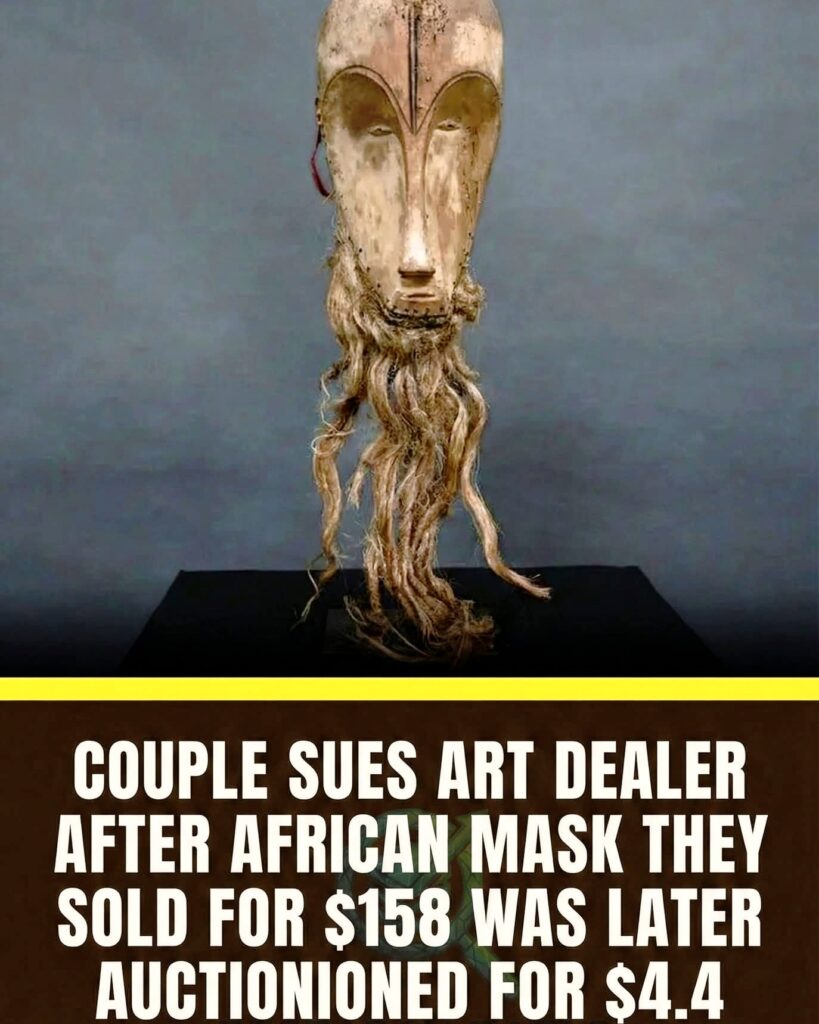
They Sold It for $158. It Sold Months Later for $4.4 Million.
In 2021, an elderly couple in France cleared out their attic and sold what they thought was a decorative African mask for €150, about $158, to a local antiques dealer.
They had no idea what it was.
The piece turned out to be a rare 19th century Fang “Ngi” mask from Gabon, created by the Fang people and historically associated with secret societies that identified and judged alleged sorcerers. Only a small number of authentic Ngi masks are known to exist worldwide.
The mask had reportedly belonged to a relative who served in colonial Africa decades earlier. It sat unnoticed in the attic for years.
In 2022, the dealer resold it at auction. It fetched €4.2 million, roughly $4.4 million.
The couple sued, arguing they were misled about the mask’s value and cultural importance. But in 2023, a French court ruled against them, stating that the sale had been legally valid. The judge held that buyers are not required to volunteer an item’s potential resale value if no fraud or concealment is proven.
The ruling sparked debate about ethics in the art world, colonial-era acquisitions, and the responsibility of sellers to seek proper appraisal.
The lesson is not just about luck.
It is about information.
Before you sell something with international history, especially cultural artifacts, get more than one expert opinion. Because sometimes what looks like attic clutter carries centuries of meaning and a price tag no one expects.