Deep in the fast-flowing rivers of Cameroon and Equatorial Guinea lives a frog that doesn’t look real.
The Goliath frog, scientifically known as Conraua goliath, is the largest frog species on Earth.
An adult can grow over 30 centimeters long.
Some weigh more than 3 kilograms.
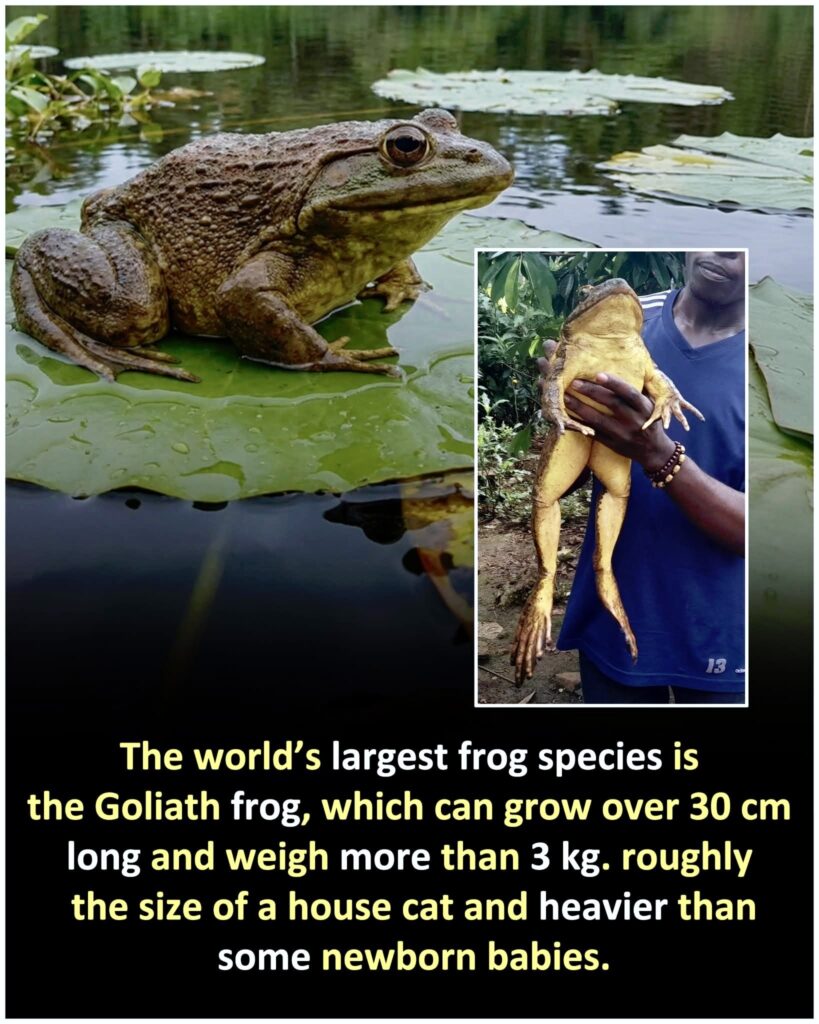
That’s not “big for a frog.”
That’s bigger than some house cats.
And yet, despite its size, this amphibian isn’t slow or clumsy. It can leap powerful distances and swim with impressive strength through rushing river currents.
But here’s the part that makes scientists pause.
Goliath frogs build.
Along riverbanks, they move stones and gravel to create protective pools for their tadpoles. These small rock-walled nests shield the young from strong currents and predators. Very few amphibians show this level of physical environmental modification.
It’s not just instinct.
It’s engineering.
Unfortunately, this giant is in trouble.
Habitat destruction from logging and agriculture is shrinking its river ecosystems. It is hunted for food. It is captured for the exotic pet trade. Pollution and human expansion continue to pressure its fragile environment.
Today, the Goliath frog is classified as endangered.
The largest frog in the world survives in only a narrow slice of Central Africa, clinging to rivers that grow more threatened each year.
It’s a reminder of something powerful:
Size doesn’t guarantee survival.
Even giants need protection.