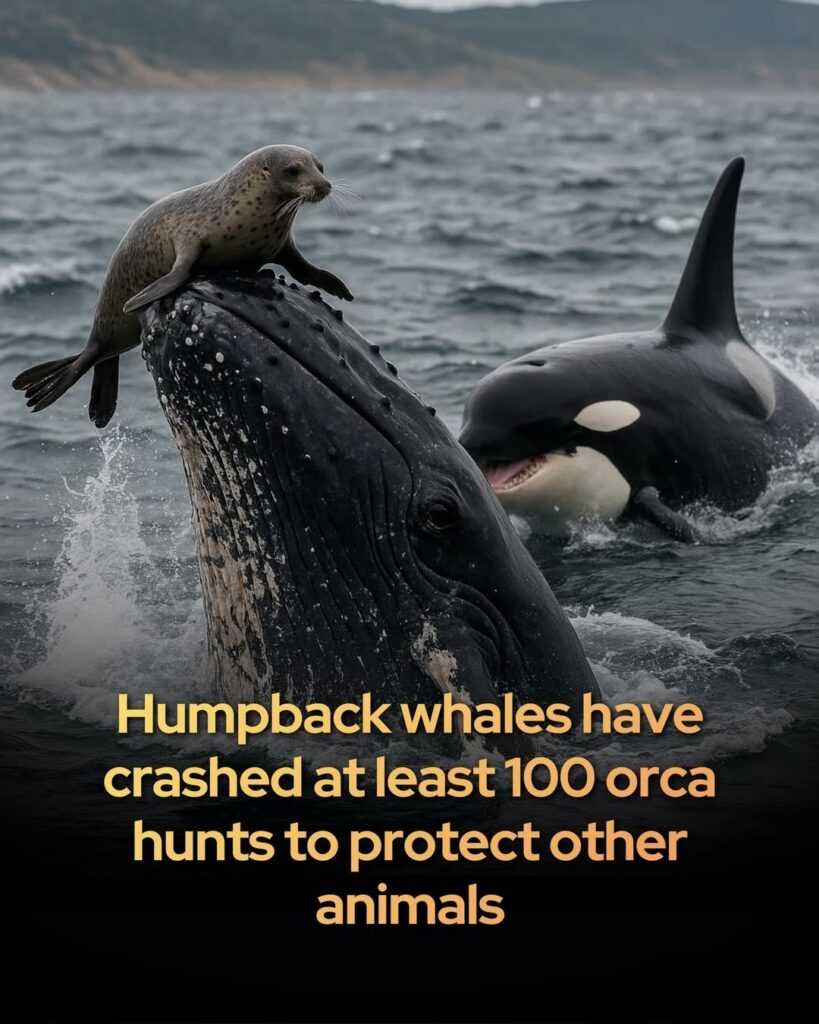
They are emerging as the ocean’s unofficial guardians.
In a remarkable display of marine behavior, humpback whales are intentionally disrupting killer whale hunts to protect other species.
A study of 115 encounters revealed that these massive cetaceans intervened in orca attacks with a 90% success rate. These interventions are not limited to their own calves; humpbacks have been observed shielding seals, sea lions, and even sunfish using their barnacle-crusted fins. In some instances, the whales have even lifted smaller animals out of the water to keep them safe, often traveling long distances specifically to engage in these rescue missions.
The motivation behind this behavior remains a subject of intense scientific debate. While some researchers suggest it stems from a defensive instinct meant to protect their own young, others believe it hints at a deeper social awareness or even empathy. Unlike many interactions in the wild, these rescues offer no clear biological reward or food benefit to the humpbacks, who often depart immediately after the prey escapes. This altruistic defiance suggests a complex emotional landscape within the species, leading some biologists to describe humpbacks as the ocean’s self-appointed guardians against apex predators.
source: Pitman, R. L., Deecke, V. B., Gabriele, C. M., Srinivasan, M., Black, N., Denkinger, J., Durban, J. W., Mathews, E. A., Matkin, D. R., Neilson, J. L., Schulman-Janiger, A., Shearwater, D., Stap, P., & Ternullo, R. (2016). Humpback whales interfering when mammal-eating killer whales attack other species: Mobbing behavior and interspecific altruism? Marine Mammal Science, 33(1), 7-58.